Dieser Testbericht ist auf Englisch verfasst.
LifeStraw Review 2026: Which Filter Is Worth It?
LifeStraw review 2026: what testers found about the Personal straw, Go bottle, Peak Series and Home pitcher, what it will not filter, and the best alternatives.
Von Simple Life Reviews · Aktualisiert
Dieser Testbericht wurde mit KI-Unterstützung auf Grundlage öffentlich verfügbarer Tests und Erfahrungsberichte von Nutzern recherchiert und verfasst und anschließend automatisierten Fakten- und Quellenprüfungen sowie einer redaktionellen Durchsicht unterzogen. Wir haben das Produkt nicht selbst getestet. So bewerten wir
Einige Links in diesem Testbericht sind Affiliate-Links. Wenn Sie über diese Links kaufen, erhalten wir möglicherweise eine Provision, ohne dass Ihnen Mehrkosten entstehen.
Unsere Bewertung
Independent testers and long-term users confirm LifeStraw does its core job cheaply and reliably. Suction effort, the Go bottle's leaks and the lack of virus protection keep it below the best personal filters.
Bewertungen nach Produkt
- LifeStraw Go Series
- LifeStraw Peak Series
- LifeStraw Home
LifeStraw turned a humanitarian water filter into one of the best-selling pieces of outdoor gear on Amazon, and its range now runs from a two-ounce straw to a kitchen pitcher. This LifeStraw review gathers what gear testers, an emergency-preparedness guide, a family field test and a long-term traveller found, so you can tell which LifeStraw is worth buying, what it will not protect you from, and when a rival filter makes more sense.
LifeStraw review verdict: great value against bacteria and parasites, not a cure-all
LifeStraw is worth buying if you want cheap, light, maintenance-free protection against bacteria and parasites in streams, lakes and dodgy taps: the Personal straw for emergency kits and ultralight trips, the Go Series bottle for travel, the Peak Series for hikers who want a faster drink. It is the wrong tool if you need virus protection, chemical or salt removal, or an easy pour for a group; for those jobs the sources point to purifiers, the LifeStraw Family or the Home pitcher, and to rivals from Sawyer, Katadyn and Grayl.
What LifeStraw is, and who owns it
LifeStraw began as a public-health tool. BestGearReviews traces the straw to its 2005 invention by the Swiss company Vestergaard for people in developing countries, and Honest Brand Reviews notes the underlying technology dates to 1999, when it was created to remove Guinea worm larvae from drinking water, with consumer sales starting in the early 2010s with the Go bottle, as Honest Brand Reviews recounts. The brand still ties every sale to its Give Back programme, which it says provides a child with a year of safe water for each product sold, and it holds Climate Neutral and B Corp certifications. For a buyer the practical point is that this is an established, mission-driven company with wide retail distribution, not a marketplace unknown.
How the filter works, and what it does not remove
Every standard LifeStraw uses a hollow-fibre membrane with 0.2-micron pores, and Emergency Gear Lab's guide puts the removal rates at 99.9999% of bacteria and 99.999% of parasites such as Giardia and Cryptosporidium, with a filter life of 4,000 litres, about 1,000 gallons, and no batteries, pumping or chemicals, per Emergency Gear Lab.
The limits matter as much as the headline numbers. Every source agrees that the standard Personal, Go and Peak filters do not remove viruses, because viruses are far smaller than the pores, and that they leave chemicals, heavy metals and dissolved salt in the water. Outdoor Life explains the trade-off: filters that trap viruses by adsorption on activated carbon, such as Grayl, clog faster, and the MSR Guardian, whose pores are a tenth the size of LifeStraw's and do catch viruses, costs about $400, roughly 20 times a LifeStraw, per Outdoor Life. In practice LifeStraw suits North American and European backcountry water and most travel, not flood water, sewage-contaminated sources or the sea. Within the range, the Family gravity purifier adds virus protection and the Home pitcher targets lead, microplastics and PFAS, per the brand's own site.
The LifeStraw range compared
| Model | Best for | Filter life and size | Price seen |
|---|---|---|---|
| LifeStraw Personal | Emergency kits, ultralight hiking | Straw of about 2 ounces and 9 inches, up to 1,000 gallons (BestGearReviews) | $15 to $25 (BestGearReviews) |
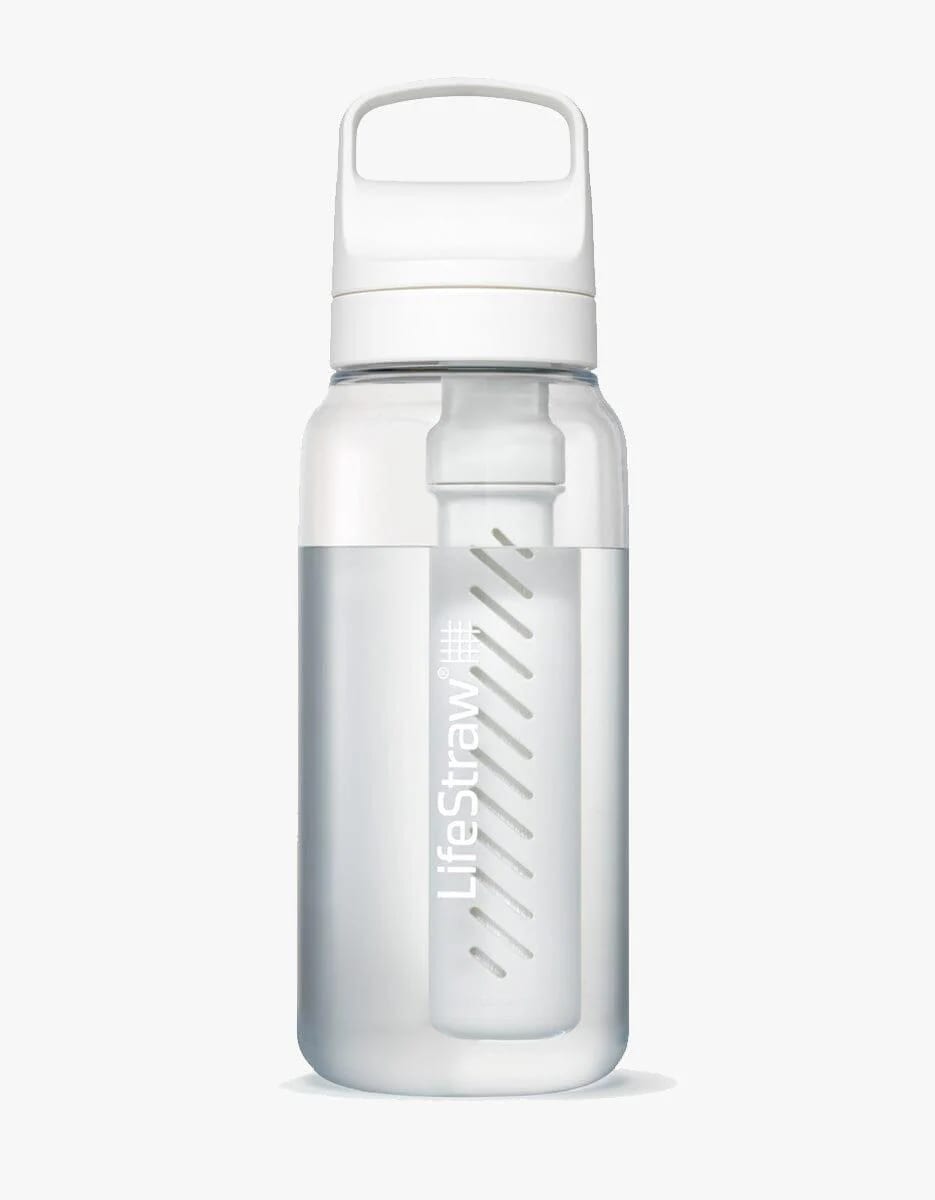
| LifeStraw Go Series | Travel, daily carry | Membrane plus carbon capsule in a 22-ounce bottle (Emergency Gear Lab) | $45 plastic, $60 stainless (Honest Brand Reviews) |
| LifeStraw Peak Series | Backpacking, faster flow | Same membrane, collapsible, attaches to bottles | see brand store |
| LifeStraw Home | Tap water at home | Replaceable cartridges, 7-cup pitcher | $40 plastic, $60 glass (Honest Brand Reviews) |
| LifeStraw Flex | Inline, gravity or bottle use | Multi-function filter | $25 (Honest Brand Reviews) |
List prices come from the reviews cited; the brand store runs frequent promotions and at the time of writing listed the Home Essential pitcher and the Go Series bottle at autumn-sale discounts.
LifeStraw Personal: the icon, with one real weakness
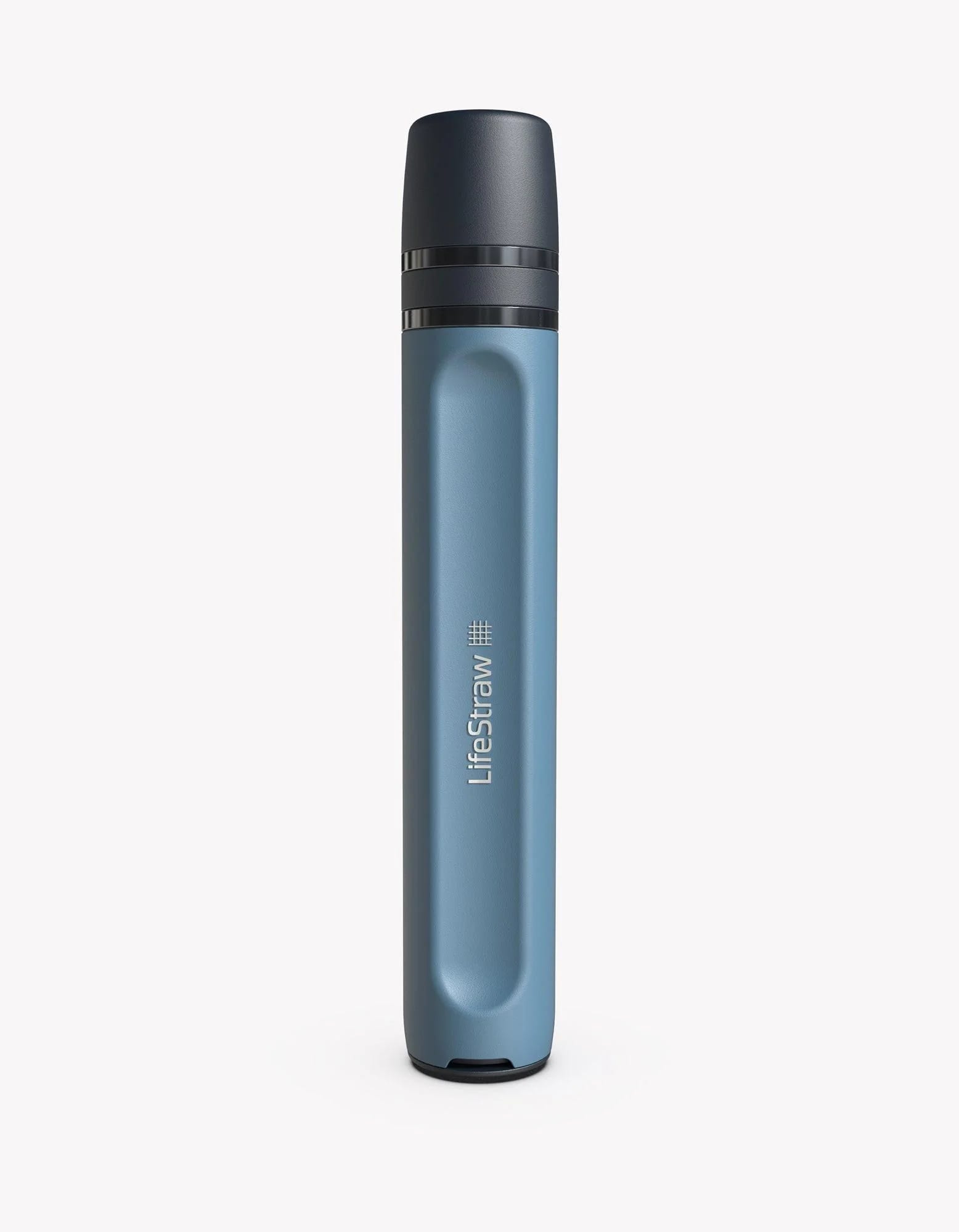
The Personal straw is the product most people mean by "LifeStraw", and the reviews agree on both its strength and its flaw. OutdoorGearLab, which buys everything it tests, gives it an overall score of 66, with top marks for set-up, 9.0 for weight and packability at 1.75 ounces, a solid 8 for water quality, but only 3.0 for ease of filtration because you have to suck hard to draw water, and a low durability score because the long tube could snap and a clogged filter cannot be opened, per OutdoorGearLab. Its verdict: unbeatable at this price and weight for emergency use or short trips where water is plentiful, while the Sawyer Micro Squeeze and Mini cost a little more and perform better.
The suction problem is real for families. Outdoor Life handed a glass of water and a straw to each family member: the adults managed with effort and found the Peak Series easier, but a three-year-old gave up within seconds, so the straw is not the family-friendly emergency tool it looks like, as Outdoor Life describes. The same test stresses that the straw has no reservoir, so you must carry a bottle to hold water on the move.
Owners who use it as intended are kinder. Emergency Gear Lab's field testing reports a flow of 1.5 to 2 litres per minute with moderate effort, a gradual decline as the membrane fills, a noticeable slowdown at 80 to 90% of rated capacity, and a cost of roughly $0.02 per gallon over the filter's life, per Emergency Gear Lab. BestGearReviews adds a practical warning: the filter has a shelf life of about five years, so do not leave an expired straw in an emergency kit.
LifeStraw Go Series: the travel bottle
The Go Series bottle puts the same membrane plus an activated-carbon capsule into a bottle you drink from through a straw, and Honest Brand Reviews lists the plastic Go at $45 and the insulated stainless version at $60, noting the bottle is dishwasher safe once the filter is out, per Honest Brand Reviews. The travel blog Traverser la Frontière, whose author used a Go daily through a 10-month trip across Vietnam and beyond, calls it one of his best purchases, with one caveat that applies to the two-stage design: the carbon capsule needs replacing every 100 litres, far sooner than the 1,000-litre membrane, so running costs are higher than the sticker suggests, per Traverser la Frontière. The complaints owners raise about the Go are consistent across sources: a strong suck is needed, the mouthpiece is hard to clean, the rigid bottle is bulky, and filtered water cannot be poured into another container.
LifeStraw Peak Series: the fix for slow drinking
The Peak Series is LifeStraw's answer to the suction complaint. Emergency Gear Lab's testing records 25 to 30% faster flow than the standard products with the same filtration and a collapsible design that survived hundreds of fold cycles, per Emergency Gear Lab. Outdoor Life adds that the Peak straw's dirty end attaches to a water bottle or hydration bladder, so it can work like a squeeze or gravity filter, and OutdoorGearLab names the LifeStraw Peak Squeeze its favourite personal water filter after years of testing. If you hike regularly rather than keeping a filter for emergencies, this is the LifeStraw to buy.
LifeStraw Home, Flex and Family
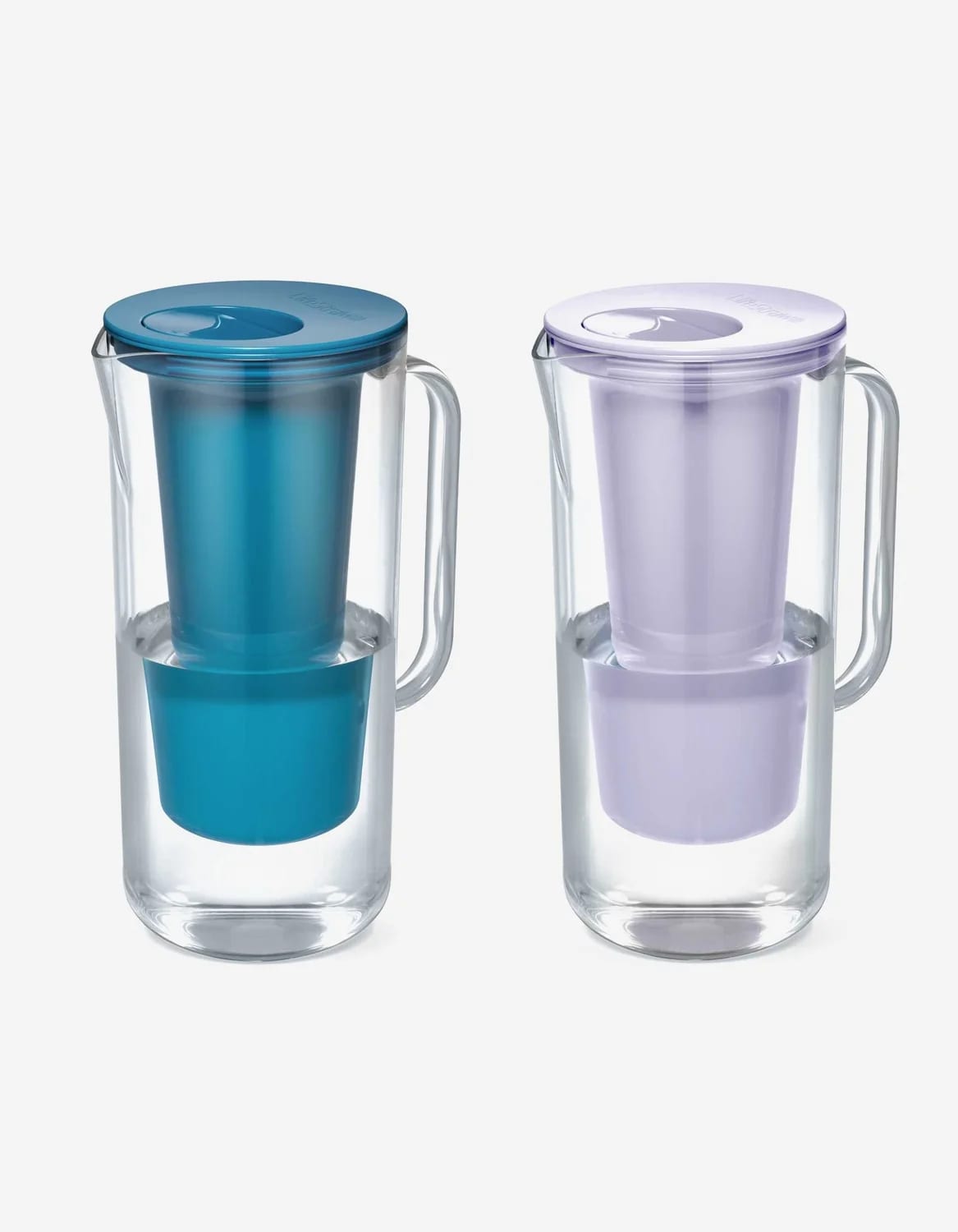
The Home pitcher brings the membrane indoors and adds a carbon and ion-exchange stage. Honest Brand Reviews lists the glass pitcher above the plastic 7-cup in price, noting the plastic version lacks the silicone base and is a little more fragile; the brand describes it as the only filter pitcher that removes bacteria and parasites as well as lead, microplastics and PFAS. The Flex is the minimalist's inline filter, and the Family is a gravity-fed system that BestGearReviews says filters up to 12 litres per hour and is the one LifeStraw that also handles viruses, per BestGearReviews.
How long does a LifeStraw last?
Capacity and calendar time are different things. The membrane is rated for about 4,000 litres, which Emergency Gear Lab says means years of intermittent emergency use but only several months of daily drinking, and Honest Brand Reviews frames the same capacity as roughly five years of one person's drinking water. Replace it when suction becomes hard or flow drops noticeably; to maintain it, OutdoorGearLab suggests blowing water back through the straw to clear clogs, every source advises drying the filter before long storage, and BestGearReviews points out that a clogged filter cannot be cleaned or replaced.
What owners and testers complain about
- Hard suction. The lowest sub-score in OutdoorGearLab's test and the reason a small child could not use it in Outdoor Life's trial; the Peak Series addresses it.
- No reservoir. The straw stores nothing, so you need a bottle to carry water.
- Leaks, taste and cleaning on the Go bottle. Owners report leaks when the bottle is on its side, a plastic taste and a hard-to-clean mouthpiece.
- No virus, chemical or salt removal on the standard filters, so a LifeStraw is not a purifier.
- Carbon capsule life. The Go 2 capsule lasts a fraction of the membrane's life, per Traverser la Frontière.
- Sealed filter. A clogged straw cannot be opened or serviced.
Alternatives worth a look
| Alternative | Why consider it |
|---|---|
| Sawyer Mini / Micro Squeeze | Much longer filter life and easy bottle filling at a similar price, per BestGearReviews and OutdoorGearLab |
| Katadyn BeFree | Soft-flask filter praised by travel reviewers for easy drinking |
| Grayl GeoPress | Press-style purifier that also handles viruses and chemicals, at a higher price |
| MSR Guardian | Pores small enough to remove viruses, at many times the cost, per Outdoor Life |
| Purification tablets | OutdoorGearLab's lightest option when taste is masked with electrolytes |
Who should buy LifeStraw, and who should skip it
Buy the Personal straw for a car or home emergency kit, a bug-out bag or ultralight trips where you will drink straight from clear streams. Buy the Go Series if you travel in places with unreliable tap water and want to stop buying bottled water, accepting that you must carry it upright and clean it well. Buy the Peak Series if you hike often and want easier drinking. Buy the Home pitcher if your concern is tap-water lead, microplastics and PFAS rather than the outdoors.
Skip LifeStraw's standard filters if you need protection from viruses, if you drink from agricultural or industrial run-off, if you want to filter for a group, if small children must use it unaided, or if you are at sea: none of the sources finds the straw suitable for those jobs.
Pros and cons
Pros
- Removes bacteria and parasites reliably, per every test and guide cited
- Very light and cheap, with no batteries, pumping or chemicals
- Long filter life for emergency and intermittent use
- Wide range from straw to pitcher, with the Peak Series fixing the flow complaint
- Mission-driven company with a Give Back programme and strong retailer ratings
Cons
- Standard filters do not remove viruses, chemicals, heavy metals or salt
- Hard suction on the Personal straw and the Go bottle
- Go bottle leaks when not upright and has a hard-to-clean mouthpiece
- Short-lived carbon capsule on the two-stage Go adds running costs
- No reservoir, and a clogged filter cannot be opened
Our ratings
Overall: 4/5. Overall, LifeStraw earns a four because independent testers at OutdoorGearLab and long-term users confirm it does its core job cheaply and reliably, while the suction effort, the Go bottle's leaks and the lack of virus protection keep it below the best personal filters.
| Model | Our rating |
|---|---|
| LifeStraw Go Series | 3.5/5 |
| LifeStraw Peak Series | 4.5/5 |
| LifeStraw Home | 4/5 |
The LifeStraw Go Series gets 3.5/5: a genuinely useful travel bottle that a year-long traveller at Traverser la Frontière swears by, pulled down by the leaks, plastic taste and cleaning problems owners report and by the short-lived carbon capsule.
The LifeStraw Peak Series gets 4.5/5: faster flow in Emergency Gear Lab's testing, bottle and bladder compatibility noted by Outdoor Life, and OutdoorGearLab's pick as the best personal filter; it loses half a point only because it shares the membrane's virus and chemical limits.
The LifeStraw Home gets 4/5: it is the one pitcher in the sources that tackles bacteria and parasites alongside lead and PFAS, and Honest Brand Reviews reports strong customer ratings for both versions, but no independent lab test of the LifeStraw Home appears in our sources.
FAQ
Is LifeStraw worth it?
For emergency kits, hiking in areas with clear natural water and travel where tap water is unreliable, yes: it is cheap, light and proven against bacteria and parasites. It is not worth it as your only protection where viruses, chemicals or salt are the concern.
How long does a LifeStraw last?
The membrane is rated for about a thousand gallons, which works out to years of occasional use or several months of daily drinking, and the sealed filter has a shelf life of around five years. Replace it when sucking becomes hard or the flow drops sharply.
Does LifeStraw remove viruses?
No. The standard membrane in the Personal, Go and Peak filters lets viruses through. Only the LifeStraw Family purifier adds virus protection; for viruses in a bottle, reviewers point to purifiers such as the Grayl GeoPress or the MSR Guardian.
Can you drink saltwater with a LifeStraw?
No. LifeStraw filters remove particles and microorganisms, not dissolved salt or chemicals, so seawater stays undrinkable.
Is LifeStraw safe for kids to use?
The filter itself is safe, but Outdoor Life's family test found a small child could not generate enough suction to drink. Older children manage with practice, and the Peak Series or a Go bottle is easier for them.
Do LifeStraw filters need maintenance?
Very little. Blow water back through the straw to clear clogs, rinse the Go bottle's mouthpiece regularly because it collects grime, and let the filter dry before storing it. Replace the Go's carbon capsule far more often than the membrane.
Who owns LifeStraw?
LifeStraw is the consumer brand of a company founded by the Swiss firm Vestergaard that developed the technology for public-health programmes in Africa before selling to consumers. It runs a Give Back programme, is B Corp certified and sells through its own store and major retailers.